 Getty ImagesSave this storySave this story
More than ever, consumers are wary of being taken for a ride. And if they feel like they’ve been scammed—be it by an $800 polyester dress or a face cream stuffed with filler ingredients—they’re taking to social media to talk about it.
Aesthetic treatments are no exception. In the past year or so, people have been increasingly outspoken about suspicions that their injectors are “watering down” their neuromodulators to improve their margins—and that the wrinkle-reducing effects of Botox and its peers aren’t lasting as long because of it. In a TikTok with over 1.3 million views, a Texas woman named Alexis Poulos vocalized her frustration over diminishing returns on her Botox treatments (caption: “why Botox not working anymore??!”) and was met with comments like “Because they’re diluting it lol.” Another recent TikTok by creator Bryce Gruber doubled down on the idea that people are being ripped off by their injectors; viewers commented in agreement while asking how they could tell if their neuromodulator was cut with saline.
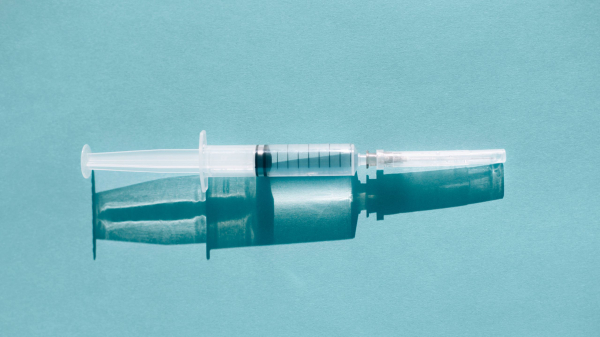
First off, all neuromodulators available in the U.S. are cut with saline. That’s how they work. They arrive as a vial with a thin dusting of a fine powder on the bottom. When a provider is ready to use the product, they add saline to create an injectable liquid. To save time, a provider might reconstitute a vial at the beginning of the day rather than in front of a patient and—depending on the areas being treated and the amounts required—use it to treat different patients throughout the day. Each manufacturer has specific refrigeration and expiration requirements, but most reconstituted neuromodulators will—with appropriate refrigeration—last about four weeks once the saline is added.
Exactly how much saline is added depends on the patient’s needs and the professional’s preference, though each pharmaceutical manufacturer has a standard recommendation. While the end result may be similar, the chemical makeup of each neuromodulator is unique, so reconstitution rates vary, and the recommended dose for any particular area may differ. For example, Allergan, the maker of Botox, recommends 2.5 ml of saline for a 100-unit vial, and recommends 64-units for treating moderate-to-severe forehead lines, crows feet and glabellar (frown or 11s) lines. Galderma-distributed Dysport suggests 2.5 ml of saline for a 300-unit vial and 50 units for its on-label use for frown lines. Revance's Daxxify suggests 1.2 ml for a 100-unit vial and 40 units for on-label use in frown lines. Merz Aesthetics-owned Xeomin recommends 0.5 mL of saline solution in a 100-unit vial and 20 units for the on-label use of frown lines, while Evolus-owned Jeuveau recommends 2.5 mL for a 100-unit dose and 20 units for the on-label use of frown lines.
These ratios have been extensively tested in clinical studies by each company, and are the only ones approved for “on-label” use, meaning in a way that has been proven safe and effective by the manufacturer, with the clinical data to show for it.
Aside from being a basic necessity for reconstituting a powder, dilution also helps spread a neuromodulator within an injection site. The more saline solution added, the larger the area of spread you’ll get for each unit of the drug. But the additional saline doesn’t change the strength of a unit itself. It’s the number of units that dictates the potency of an injection and the lasting power of your treatment.
If a neuromodulator isn’t being used in an appropriate treatment dose and has been overdiluted, “you could get more spread in an area, so there's the initial ‘wow’ result, but then maybe it wears off in a month or two [as opposed to three or four],” says Morgan Rabach, a board-certified dermatologist in New York City. An overdiluted neuromodulator near dynamic areas like the eyes could cause issues beyond reduced duration, like eyelid droop. That’s because a more spread-out neuromodulator also means less control over where it drifts, Dr. Rabach explains.
So how does a patient know if they are being given a lower-than-necessary dose of neuromodulator that’s been masked by overdilution (sometimes called hyper-reconstitution or hyperdilution)at least until the results start fading fast? To answer that you have to understand exactly how neuromodulators are priced, and injected.
The Price is Right
When a person books a neuromodulator treatment, whether in a doctor’s office or at a med spa, they can usually expect to pay based on the number of units used. An alternative to having patients pay a fixed price based on treatment area, this system has its benefits—and its drawbacks, one of which is that it may contribute to the sort of overdilution consumers are complaining about.
In a per-unit pricing system, unit cost typically ranges from $10 to $30 in the U.S., according to the American Academy of Facial Aesthetics, and depends on factors such as location, injector expertise, or whether it’s an independent practice. As Allure previously reported, larger practices, especially nationwide med spa chains, can negotiate better wholesale prices, meaning they can charge less per unit and still turn a profit. A simple Groupon search for Botox treatments in New York City shows a plethora of deals at med spas, with prices as low as $6 per unit for 20- or 40-unit packages. (That said, please do not let a Groupon deal determine where you get your Botox. Instead, ask the provider the right questions about their training and experience.)
“A lot of practices will make Botox a loss leader, to get you in the door at a very low price even though they know it's impossible to make a profit at that point… and try to convert you to laser, filler, skin care, or whatever else that isn’t as cheap,” says Saami Khalifian, a double board-certified dermatologist in Encinitas, California, and medical director of the Allergan Medical Institute.
He believes that the current per-unit pricing system can commodify the injector and condition patients to seek out the lowest-cost option rather than experienced, results-driven providers—he also concedes that his practice uses it because it’s common industry practice and patients are most comfortable with it. Other injectors, including Dr. Rabach, prefer the per-unit model because patients get exactly what they pay for. Per-area pricing could mean patients receive fewer units than necessary so the provider does not lose money on the treatment, she says.
Still, the dominant per-unit pricing arrangement could turn patients into their own worst enemies by trying to do more with less, contributing to the overdilution issue. If a patient is only interested in spending a certain amount but is trying to cover large areas, such as the masseter muscle, the neck, or the forehead, injectors have to compensate by hyperdiluting the neuromodulator to cover those areas with fewer units.
When Hyperdilution Makes Sense
Sometimes overdilution isn’t a bad thing: All of the doctors we spoke to for this story say they’ve strategically overdiluted neuromodulators in the past to achieve a softer effect, thereby requiring fewer units. See “Baby Botox,” a technique that involves purposefully injecting fewer units than recommended for what the manufacturer considers full results. But there are no clinical studies on off-label overdilution despite it being a historically-common practice among injectors—just like treating areas like above the brows, where neuromodulator use is technically not FDA-approved.
A softer-looking result will not last as long, Dr. Khalifian and Dr. Rabach warn. Some patients might interpret shorter-lasting results as Botox resistance—or the phenomenon of becoming less responsive to neuromodulators over time—but the reality is that they have not received an adequate dosage, says Dr. Khalifan, adding that what’s considered “adequate” for any given patient will likely change with age. Older patients sometimes need fewer units than younger ones because they have less facial muscle mass, says Ava Shamban, a board-certified dermatologist in Los Angeles.
If it were true resistance, the neuromodulator would not work at all, says Dr. Shamban, adding that she has seen only one or two legitimate cases of resistance over her multi-decade career.
The Way Forward
In the near future, hyperdilution may no longer be a patient concern due to new product innovations and advanced treatment techniques.
Relfydess, the first ready-to-use liquid neuromodulator, is currently navigating its way through the FDA approval process. The Galderma-owned product has received approval in Europe, the U.K., and Australia, and under typical timelines, a U.S. launch could be expected by year's end, according to a Galderma spokesperson. The treatment will save injectors precious time and, says the company, help alleviate the inconsistencies that come with reconstitution—and the worries of some consumers about overdilution. Based on phase III clinical data presented at the American Society of Dermatologic Surgery meeting last year, Relfydess also works quickly (for a third of patients, results were visible in a single day) and lasts up to six months—about two months longer than most other neuromodulators on the market.
As the aesthetic world waits for Relfydess to be approved in the U.S., injectors may naturally move away from overdilution on their own. Injector techniques are always evolving based on new understandings about neuromodulators and human anatomy, and a series of three studies conducted between 2016 and 2021 showed that higher unit doses of Botox led to longer-lasting results compared with the levels Allergan tested when seeking FDA approval. With higher doses, injectors are likely to underdilute because they do not need the neuromodulator to spread as much, says Dr. Khalifian. But this requires more precise injections and greater injector expertise.
Why Your Injector Matters
Unless you’re an injector yourself, it’s tough to tell if your provider is appropriately diluting or overdiluting your neuromodulator—which is why it’s important to see someone you have vetted and trust and are extremely confident is ethical. It’s Allure’s stance that treatments cross the skin barrier (as neuromodulators do) should be performed by the medical professionals most qualified to perform them—and to handle their complications. A board-certified dermatologist or plastic surgeon is ideal, but the reality is that many Americans are getting these injections at med spas—if you’re one of them, do your due diligence (because you can’t count on other regulation keeping you safe).
In any case, during your initial consultation, take note of whether or not your provider takes the time to explain where they will be injecting, and whether or not they bristle at questions about how much neuromodulator they'll be using. The doctors we spoke to agree that it’s more important to ask about unit dosage than about dilution volume, and to trust your gut if something feels off about the experience. As Dr. Rabach puts it: “If you're even slightly suspicious that an injector is shortchanging you to get more money in their pocket… why are you even there?”